
Most pool research online is written for warm climates — Arizona, Texas, Florida — where a pool runs most of the year and winter means turning the heater down. Utah County is a different project. At roughly 4,500 to 5,000+ feet along the base of the Wasatch Range, you get real winters, ground that moves, and a summer that's worth engineering around. This is the deeper-dive companion to our city pages for American Fork, Pleasant Grove, Spanish Fork, and Mapleton — written for the research phase, before you're comparing specific quotes.
Freeze-thaw ground movement is the first design decision
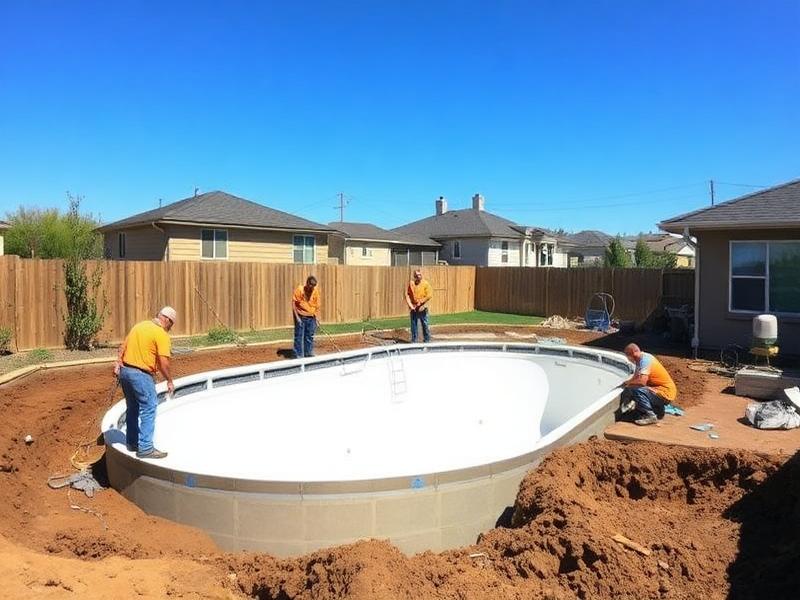
Wasatch Front soil freezes, thaws, and freezes again through the winter, and it moves when it does. That movement is the single biggest reason we steer Utah County homeowners toward a fiberglass shell. A gel-coat fiberglass shell flexes with ground movement; rigid gunite resists it, and where it can't flex it cracks. Cracked gunite means patching, re-plastering, and a surface that keeps telling on itself every spring.
This isn't a Utah County–only position — it's the same reasoning we apply at elevation in Cedar City, which sits high enough to have the same freeze-thaw pattern as the Wasatch Front even though it's in Southern Utah. Elevation and freeze cycles drive the shell choice, not the county line.
Be honest about swim season length
An unheated pool in American Fork or Pleasant Grove is realistically comfortable from about Memorial Day to Labor Day. That's roughly three solid months. In our Southern Utah service region — St. George, Washington, Ivins, Santa Clara — the same pool is usable something closer to April through October.
We'd rather set that expectation before you sign than after your first September. A three-month core season is still plenty of pool if the build is designed for it. It is a disappointment if you budgeted for a Phoenix season and got a Wasatch one.
Season extension: what actually adds weeks
- Heater: the direct lever on both ends of the season. Sized during design, not added later — heater capacity affects plumbing runs and gas or electrical service, so retrofitting costs more than including it.
- Automatic cover: holds overnight heat so the heater isn't restarting from cold every morning, and it's the cheapest ongoing way to keep a shoulder-season pool swimmable. On the Wasatch Front covers also have to be chosen for snow load, not just heat retention.
- Windbreak hardscaping: wind strips heat off the water surface faster than air temperature does. This matters most in Spanish Fork, at the mouth of Spanish Fork Canyon, where the canyon winds are strong and consistent enough to be a real design input — walls, fencing, and planting placed to break prevailing wind across the deck rather than funnel it.
- A heated spa: the honest answer for spring and fall. It's usable when the pool isn't, and it's the feature people actually use in October.
Winterization belongs in the design, not in a service call
In a warm climate winterizing is a checklist. Here it's a design constraint. Plumbing runs need to be laid out so they can be fully blown out and drained; equipment pads need to be serviceable in cold weather; deck drainage has to shed meltwater away from the shell instead of pooling and refreezing against coping.
We build winterization into the design from day one on every cold-climate install — the same approach we use in Cedar City. Doing it at design stage costs nothing extra. Discovering a plumbing run that can't drain properly costs a repair every spring.
Foothill and sloped lots
A lot of Utah County's newer development climbs toward the mountains, which means grade to solve before there's a pool to swim in. Foothill subdivisions in American Fork and Pleasant Grove typically need retaining walls and terraced, multi-level decks to produce flat, usable deck space. That's structural work with real cost attached — worth knowing early, and worth having quoted as part of the pool rather than as a separate landscaping project later.
Mapleton reads differently: larger lots, lower density, and tighter development restrictions. There's usually more room to work with and more reason to do a full custom pool-and-hardscape buildout instead of a production-lot install — but the design review process deserves attention up front.
The short version
- Assume a Memorial Day to Labor Day core season, then decide what you'll spend to extend it.
- Let freeze-thaw drive the shell choice — fiberglass flexes where gunite cracks.
- Specify heater, cover, and windbreak during design, not after the first season.
- Treat winterization as part of the plumbing plan.
- Price grading and retaining walls with the pool if your lot has slope.
Every lot answers these questions differently. The only way to get real numbers is an on-site look at grade, soil, access, and utility runs — free, and with no obligation.