The short answer for Utah homeowners
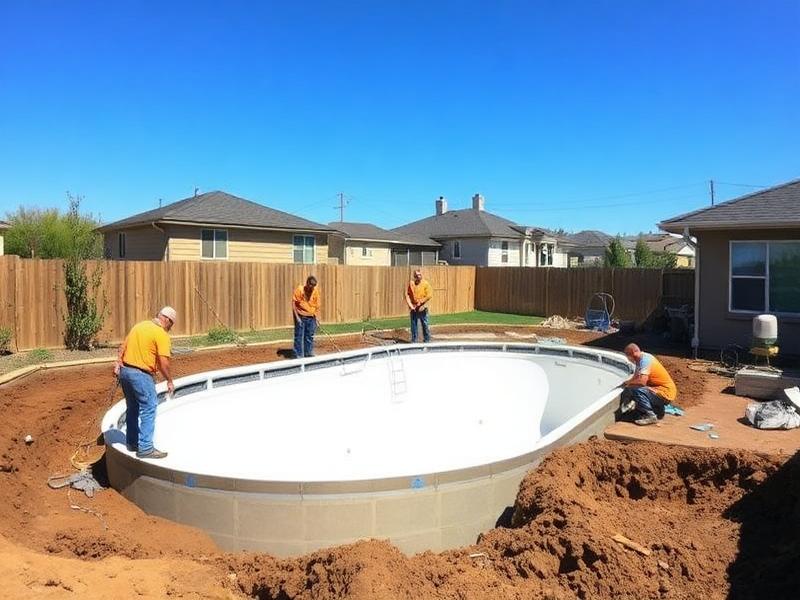
For most Utah backyards, fiberglass is the better long-term choice. Utah's freeze/thaw cycles are hard on concrete pool interiors, and gunite pools need re-plastering every 10–15 years. A quality fiberglass shell (like Barrier Reef) installs in weeks instead of months and holds up better to our climate — with lower chemical use and no interior refinishing.
Concrete still wins in one scenario: a completely custom shape, oversized dimensions, or built-in features (vanishing edges, large tanning ledges shaped to a specific footprint) that no fiberglass mold offers.
Side-by-side comparison
| Factor | Fiberglass | Concrete (Gunite) |
|---|---|---|
| Install time | 2–5 weeks | 3–6 months |
| Utah freeze/thaw | Flexes with ground movement | Prone to surface cracking |
| Interior refinishing | Never | Every 10–15 years ($8k–$15k) |
| Chemical use | Low (non-porous gelcoat) | High (porous plaster) |
| Algae resistance | Excellent | Fair |
| Shape flexibility | Pre-molded models | Fully custom |
| Typical Utah install | $65k–$110k | $85k–$150k+ |
| Lifetime cost (25 yrs) | Lower | Higher (re-plaster + chemicals) |
Why Utah climate matters
Utah runs through dozens of freeze/thaw cycles between October and April. Water seeps into porous plaster and the microcracks in concrete, freezes, expands, and slowly delaminates the surface. A fiberglass shell is one continuous piece with a flexible resin core and a non-porous gelcoat — there's no plaster to fail and no seams for water to work into.
Fiberglass pros and cons
Pros
- Installed in weeks, not months
- Non-porous, low chemical use
- Handles Utah freeze/thaw well
- No re-plastering, ever
- Smooth surface — no rough plaster feet
Cons
- Limited to pre-designed shapes and sizes
- Max ~16 ft wide (transport limits)
- Needs crane placement on tight lots
Concrete pros and cons
Pros
- Fully custom shape and size
- Supports vanishing edges and complex features
- No mold constraints
Cons
- 3–6 month build timeline
- Re-plaster every 10–15 years
- Higher chemical use, harder on skin
- Surface cracks common in Utah winters
How to decide
If a Barrier Reef model fits your yard and lifestyle, fiberglass is almost always the right call in Utah. If you need a fully custom footprint or built-in features that don't exist in any mold, concrete is worth the higher up-front and lifetime cost. Either way, we'll walk your yard, check soil and access, and give you a real number — no pressure.